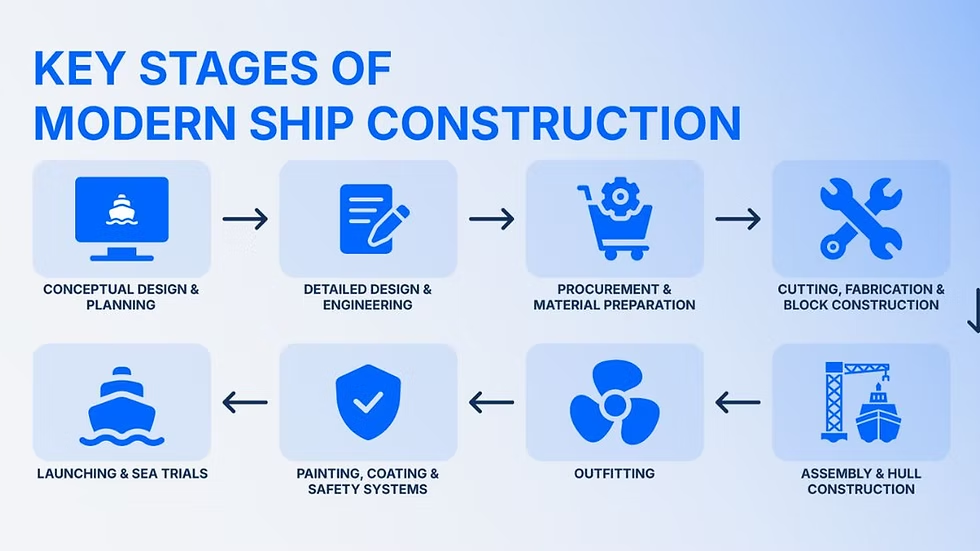
The modern ship design process is a highly detailed and technical journey that transforms an idea into a fully operational vessel. From the earliest concept sketches to final production and sea trials, every phase requires careful planning, engineering precision, and collaboration between naval architects, marine engineers, and shipbuilders. As the maritime industry continues to evolve with advanced technology, environmental regulations, and changing operational requirements, ship design has become more sophisticated than ever before.
Whether designing cargo ships, passenger vessels, naval ships, or offshore support vessels, the process follows a structured sequence of stages to ensure safety, efficiency, performance, and compliance with international maritime standards. Understanding these stages is essential for anyone involved in the maritime sector because each phase directly impacts the vessel’s functionality, construction cost, fuel efficiency, and long-term operational success.
In this article, we will explore the key stages in the ship design process, how each phase contributes to vessel development, and why modern ship design plays a critical role in the global shipping industry.
Concept Development and Requirement Analysis in Ship Design
The first stage in the ship design process is concept development and requirement analysis. This phase lays the foundation for the entire project because all future engineering and construction decisions depend on the initial objectives established here. During this stage, ship owners, operators, naval architects, and marine consultants work together to define the vessel’s purpose, operational environment, and performance expectations.
The design team begins by identifying the type of ship required. For example, the requirements for a container ship are very different from those of a passenger ferry, offshore support vessel, or tanker. Designers evaluate cargo capacity, speed requirements, fuel consumption targets, operating routes, environmental conditions, and regulatory standards. Budget limitations and construction timelines are also considered during this early planning phase.
One of the most important aspects of modern ship design is balancing operational efficiency with environmental sustainability. International regulations such as those established by the International Maritime Organization (IMO) require ships to reduce emissions and improve energy efficiency. As a result, designers often evaluate alternative propulsion systems, hybrid technologies, and eco-friendly materials at this stage.
The conceptual phase also includes preliminary sketches and feasibility studies. Naval architects create initial hull forms and general arrangement plans to determine whether the proposed vessel can meet operational requirements. Computational tools and simulation software are frequently used to estimate stability, resistance, and fuel efficiency before moving forward.
Additionally, risk assessments are conducted to identify potential technical or operational challenges. Safety considerations such as fire protection, emergency evacuation systems, and structural integrity are included in the early planning process. Classification societies and regulatory authorities may also be consulted to ensure compliance with international maritime rules.
This stage of ship design is extremely important because mistakes or unrealistic assumptions made during concept development can lead to costly modifications later in the project. Therefore, extensive research, data analysis, and collaboration are necessary to establish a strong foundation for the vessel’s development.
Preliminary Design and Technical Planning
Once the concept has been approved, the next phase of the ship design process is preliminary design and technical planning. This stage transforms initial ideas into more detailed engineering plans and technical specifications. It serves as the bridge between conceptual development and full-scale production.
During preliminary ship design, naval architects refine the hull shape to optimize hydrodynamic performance. The hull must provide stability, minimize drag, and improve fuel efficiency while ensuring the vessel can operate safely under various sea conditions. Advanced simulation software is often used to test different hull configurations and evaluate performance characteristics.
Engineers also begin selecting propulsion systems, power generation equipment, steering systems, and onboard machinery. The choice of engines depends on several factors, including fuel efficiency, operational requirements, environmental regulations, and maintenance considerations. In modern ship design, there is increasing interest in LNG-powered engines, electric propulsion systems, and hybrid technologies to reduce emissions and operating costs.
Structural planning is another essential component of this phase. Engineers calculate the strength requirements for the ship’s hull, decks, bulkheads, and internal structures. Materials are selected based on durability, weight, corrosion resistance, and cost. Steel remains the most commonly used material in commercial shipbuilding, although aluminum and composite materials are also used in specialized vessels.
At this stage, designers develop detailed arrangement plans that define the placement of cargo spaces, engine rooms, accommodation areas, navigation systems, and safety equipment. Efficient space utilization is critical because it affects cargo capacity, operational workflow, and crew comfort.
Another key focus of preliminary ship design is regulatory compliance. Ships must meet international safety and environmental standards established by organizations such as the IMO and classification societies like DNV, ABS, and Lloyd’s Register. Engineers ensure the vessel complies with stability requirements, fire safety regulations, pollution prevention rules, and structural standards.
Economic analysis also plays a major role during technical planning. Designers evaluate construction costs, operating expenses, maintenance requirements, and lifecycle performance to ensure the project remains financially viable. Shipowners often compare multiple design alternatives before finalizing the preferred configuration.
By the end of this stage, the project team has developed a comprehensive technical blueprint that serves as the foundation for detailed engineering and production planning.
Detailed Engineering and Production Design
Detailed engineering is one of the most complex stages in the ship design process because it converts technical plans into precise manufacturing instructions for shipbuilders. This phase involves creating thousands of detailed drawings, calculations, and digital models that guide the actual construction of the vessel.
Modern ship design heavily relies on advanced computer-aided design (CAD) software and 3D modeling systems. These technologies allow engineers to create highly accurate digital representations of the vessel, including structural components, piping systems, electrical networks, ventilation systems, and machinery layouts. Digital modeling helps identify potential conflicts between systems before construction begins, reducing costly errors and delays.
Structural engineers finalize the dimensions and specifications for every section of the ship. This includes hull plating thickness, frame spacing, welding details, and reinforcement structures. Precision is essential because even small inaccuracies can affect structural integrity and vessel performance.
Marine engineers also complete the detailed design of propulsion systems, fuel systems, cooling systems, and auxiliary machinery. Electrical engineers develop power distribution networks, communication systems, lighting systems, and automation controls. Meanwhile, safety engineers ensure compliance with fire protection standards, emergency response procedures, and evacuation requirements.
Production planning is another important element of this stage. Shipyards divide the vessel into construction blocks that can be fabricated separately and later assembled. This modular approach improves efficiency and reduces construction time. Engineers prepare manufacturing schedules, material procurement plans, and workforce requirements to coordinate the entire production process.
Automation and digitalization have significantly improved the ship design and construction process in recent years. Smart ship technologies, predictive maintenance systems, and integrated navigation systems are now commonly incorporated during detailed engineering. These innovations enhance operational efficiency and reduce long-term operating costs.
Furthermore, detailed engineering includes collaboration with suppliers and equipment manufacturers. Components such as engines, navigation systems, cranes, pumps, and safety equipment must be integrated into the vessel’s design accurately. Coordination between all parties is essential to avoid compatibility issues during construction.
This stage is critical because it ensures the vessel can be built efficiently, safely, and according to the required specifications. High-quality engineering documentation minimizes construction risks and contributes to the successful completion of the project.
Construction, Testing, and Delivery
The final stage of the ship design process involves ship construction, testing, commissioning, and delivery. This is where the vessel physically takes shape in the shipyard and undergoes rigorous testing before entering service.
Ship construction typically begins with steel cutting and block fabrication. Large sections of the vessel are built separately and later assembled using heavy lifting equipment. Welding, structural assembly, and equipment installation are performed according to the detailed engineering plans developed earlier.
As construction progresses, engineers install propulsion systems, electrical networks, piping systems, navigation equipment, accommodation facilities, and safety systems. Strict quality control measures are implemented throughout the process to ensure compliance with technical standards and classification society requirements.
One of the most important parts of modern ship design is ensuring the vessel performs as intended under real operating conditions. Therefore, extensive testing is conducted during and after construction. Harbor tests evaluate onboard systems such as engines, generators, communication systems, and safety equipment while the vessel remains docked.
After harbor testing, the ship undergoes sea trials. During sea trials, engineers and inspectors evaluate speed, maneuverability, stability, fuel consumption, braking performance, and emergency systems under actual maritime conditions. These tests verify that the vessel meets contractual requirements and international regulations.
If any issues are identified during testing, adjustments and corrections are made before final approval. Once all inspections are successfully completed, classification societies issue certification documents confirming the vessel’s compliance with maritime standards.
The delivery stage includes final documentation, crew training, and operational handover to the shipowner. Operators receive technical manuals, maintenance procedures, and safety instructions necessary for vessel operation. In some cases, shipbuilders also provide post-delivery support and maintenance services.
Today, ship design does not end with delivery alone. Many modern vessels are equipped with digital monitoring systems that collect operational data throughout the ship’s lifecycle. This information helps operators improve fuel efficiency, reduce maintenance costs, and optimize performance over time.
The construction and delivery phase represents the culmination of years of planning, engineering, and collaboration. A successful project depends on the seamless integration of all previous stages in the ship design process.
FAQs About the Ship Design Process
What is the first stage in ship design?
The first stage in the ship design process is concept development and requirement analysis. During this phase, designers define the vessel’s purpose, operational needs, and performance expectations.
Why is ship design important?
Ship design is important because it directly affects vessel safety, fuel efficiency, cargo capacity, environmental performance, and operational reliability.
What software is used in modern ship design?
Modern ship design commonly uses CAD software, 3D modeling systems, computational fluid dynamics (CFD) tools, and simulation software for engineering analysis.
How long does the ship design process take?
The timeline varies depending on vessel size and complexity. Some projects may take several months, while large commercial ships can require years from concept to delivery.
What factors influence ship design?
Important factors include vessel type, operational routes, cargo requirements, environmental regulations, fuel efficiency goals, construction budget, and safety standards.
Conclusion
The ship design process is a complex and highly organized sequence of stages that transforms an initial concept into a fully operational vessel. From concept development and technical planning to detailed engineering, construction, and sea trials, every phase plays a crucial role in ensuring the ship meets performance, safety, and environmental standards.
Modern ship design continues to evolve with advancements in digital technology, automation, sustainable propulsion systems, and smart ship innovations. As the maritime industry faces increasing demands for efficiency and environmental responsibility, the importance of advanced ship design practices will continue to grow.
By understanding the key stages involved in ship design, industry professionals and maritime enthusiasts can better appreciate the engineering expertise, planning, and innovation required to build today’s sophisticated vessels.